

Snapshot
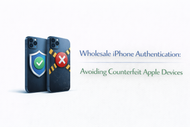
- Authentic wholesale iPhones are one of the most in-demand products but also the most counterfeited in the global device trade.
- Fake iPhones can look convincing, but differences appear in software performance, serial numbers, and packaging.
- Key authentication steps include IMEI & serial number verification, iOS system checks, and Apple warranty lookups.
- Counterfeits often fail in packaging analysis, component quality, and software diagnostics.
- Buyers who master Apple authentication protect profits, avoid compliance risks, and strengthen trust with clients.
Executive Summary
Apple dominates global smartphone demand, making iPhones the crown jewel of wholesale distribution. But where there is demand, there are counterfeits. From “perfect clone” devices built on cheap Android shells to refurbished iPhones passed off as new, the fake iPhone wholesale problem is a multi-billion-dollar issue that threatens buyers worldwide.
This guide equips wholesalers, distributors, and enterprise buyers with the tools to detect authentic wholesale iPhones. It explains Apple authentication methods, including IMEI and serial verification, packaging inspection, iOS testing, and supplier validation. It also highlights common counterfeit tricks and provides case studies of wholesalers who suffered losses due to authentication failures.
By the end, buyers will have a step-by-step framework for authenticating wholesale iPhones, ensuring that every shipment they handle is legitimate. In a market where margins are slim and reputation is everything, authentication is not a luxury — it is a survival strategy.
Table of Contents
- Why iPhone Authentication Matters in Wholesale
- Common Counterfeit iPhone Tactics in Wholesale
- Apple Authentication Methods: Step-by-Step
- IMEI & Serial Number Verification
- iOS System & Settings Authentication
- Packaging & Accessory Analysis
- Hardware & Component Inspection
- Testing Tools for iPhone Authentication
- Supplier Verification: Stopping Counterfeits at the Source
- Case Studies: Losses from Fake iPhone Wholesale Deals
- Best Practices for Enterprise-Scale Authentication
- Long-Term Risk Outlook: Counterfeits in 2026 and Beyond
- Final Word: Authentic iPhones as a Trust Currency
Why iPhone Authentication Matters in Wholesale
In wholesale distribution, Apple devices are the gold standard. iPhones consistently deliver the highest resale value, fastest turnover, and strongest global demand. But this dominance also makes them the most counterfeited smartphone brand in the world. For wholesalers, this means authentication isn’t just a precaution — it’s a profit and reputation safeguard.
The Financial Stakes
Margins in wholesale are slim, often hovering between 8–12% for flagship iPhones. A single shipment of counterfeit or misrepresented devices can erase months of profit. For example, a 200-unit batch of “Grade A iPhone 13” devices priced at $450 each represents $90,000 of capital. If even 10% turn out to be fakes or tampered units, that’s a $9,000 loss before factoring in return logistics, reputational damage, or legal exposure.
Compliance & Legal Risks
Unlike other devices, counterfeit iPhones carry significant legal and regulatory risks.
- Customs authorities in the U.S. and EU actively seize counterfeit Apple shipments.
- Reselling fake devices can expose wholesalers to lawsuits, fines, and permanent bans from trade platforms.
- Enterprise buyers — schools, healthcare systems, corporations — require full assurance of authenticity due to data security and compliance mandates.
Buyer Trust & Long-Term Contracts
In wholesale, trust is currency. Retailers, resellers, and enterprise clients expect their suppliers to deliver authentic wholesale iPhones without exception. One bad batch of fakes can cost not only the immediate deal but also long-term recurring contracts. On the other hand, buyers who can prove authentication processes often win larger deals because they provide a layer of assurance competitors cannot.
Counterfeit Market Growth
The counterfeit market is growing more sophisticated. Gone are the days of obvious fakes with poor build quality. Modern counterfeiters use near-identical casings, iOS-like skins on Android systems, and packaging that mimics Apple’s down to the fine print. Spotting fakes now requires structured authentication methods, not just a quick visual check.
Strategic Insight
For wholesalers, iPhone authentication isn’t just about avoiding loss — it’s about building resilience. Every authentic device sold reinforces reputation, preserves compliance, and secures future growth. In 2026, the wholesalers who thrive will be those who make authentication a core competency, not an afterthought.
Common Counterfeit iPhone Tactics in Wholesale
Counterfeiters know that iPhones are the most profitable target in the smartphone market. To unsuspecting buyers, many fake or misrepresented devices can appear legitimate, especially in bulk deals where inspections are rushed. Understanding the most common fake iPhone wholesale tactics is the first step in protecting against losses.
Clone iPhones (Android in Disguise)
- What they are: Cheap Android devices built to mimic iPhone casings and UI.
- How they trick buyers: The boot screen may show an Apple logo, and the interface may look like iOS at first glance, but deeper checks reveal Android settings menus.
- Telltale signs: Poor camera quality, sluggish performance, missing iOS features like FaceTime or iMessage.
? Risk level: High in export markets, where clones are mixed into lots.
Refurbished Sold as New
- What they are: Genuine Apple devices that have been repaired, re-cased, or fitted with aftermarket parts — but sold as “new.”
- How they trick buyers: Clean packaging, polished casings, and factory resets make them appear untouched.
- Telltale signs: Non-OEM batteries, replaced displays, and mismatched serial numbers between device and packaging.
? Risk level: Very common in gray-market wholesale.
Counterfeit Packaging & Accessories
- What they are: Boxes, cables, and accessories manufactured to look identical to Apple originals.
- How they trick buyers: Suppliers present sealed cartons with “factory” labels, hoping buyers skip deeper inspection.
- Telltale signs: Incorrect font spacing, missing Apple certification logos on accessories, lighter box weight.
? Risk level: Growing problem in both U.S. and overseas bulk purchases.
IMEI & Serial Number Manipulation
- What they are: Devices with altered or cloned IMEIs to pass basic verification.
- How they trick buyers: On-device IMEI matches supplier invoice, but Apple’s database shows inconsistencies.
- Telltale signs: Warranty lookup fails, multiple devices share the same IMEI, or history shows replacement/blacklist status.
? Risk level: Critical for wholesalers, as IMEI fraud can trigger customs seizures.
Franken-iPhones (Parts Hybrids)
- What they are: Devices assembled from parts of multiple iPhones, often mixing OEM with aftermarket components.
- How they trick buyers: Power on successfully and look authentic, but performance and durability suffer.
- Telltale signs: Inconsistent screw patterns, uneven screen fit, Face ID failures, or diagnostic logs showing mismatched components.
? Risk level: Common in refurbished supply chains where repair shops source parts cheaply.
Strategic Insight
Counterfeiting isn’t limited to obvious knock-offs. Today’s fake iPhone wholesale scams often involve subtle misrepresentation — refurbished devices sold as new, serial tampering, or hybrid builds. Wholesalers who assume authenticity based on surface checks risk massive financial losses. The only defense is a multi-layered authentication process that tests hardware, software, serials, and packaging.
Apple Authentication Methods: Step-by-Step
Spotting counterfeit iPhones requires a structured process. Counterfeiters have become sophisticated, but Apple provides multiple layers of identifiers and verification tools that wholesalers can use to confirm authentic wholesale iPhones and avoid falling into fake iPhone wholesale traps.
Step 1: IMEI & Serial Number Verification
- Locate IMEI/Serial: Check in three places — device settings, SIM tray, and box. All three should match.
- Apple Warranty Lookup: Enter serial at Apple’s official warranty site. A legitimate iPhone will show activation status, coverage dates, and model details.
- Red Flags: Serial not recognized, mismatched details, or multiple devices sharing the same IMEI.
? Takeaway: IMEI/serial verification is the fastest way to confirm whether a device exists in Apple’s ecosystem.
Step 2: iOS System & Settings Authentication
- Boot-Up Check: Authentic iPhones run iOS, not Android skinned to look like iOS. Verify features like FaceTime, iMessage, and Siri.
- Settings Navigation: Go to Settings > General > About to confirm model, storage, and iOS version.
- Red Flags: Laggy performance, missing core apps, or unusual OS menus.
? Takeaway: Counterfeit iPhones often mimic the look of iOS but break down under detailed inspection.
Step 3: Packaging & Accessory Analysis
- Box Inspection: Authentic packaging uses precise fonts, spacing, and high-quality printing. Look for regulatory marks (FCC, CE) and model identifiers.
- Accessory Verification: Genuine Apple cables are marked “Designed by Apple in California” and include MFI certification.
- Weight Test: Fake packaging is often lighter due to cheaper materials.
? Takeaway: Even when phones are real, counterfeit packaging may signal tampering or refurbishing.
Step 4: Hardware & Component Inspection
- Build Quality: Check screws, seams, and alignment — Apple devices are engineered with high precision.
- Screen & Display: Genuine iPhones use OLED or Retina displays with perfect color accuracy. Counterfeits often appear washed out.
- Camera Test: Authentic iPhones deliver sharp, stabilized images. Fakes often have blurry, unstable output.
- Diagnostic Tools: Use tools like PhoneCheck or 3uTools to scan hardware components against Apple standards.
? Takeaway: Physical inconsistencies, especially in display and camera performance, are strong counterfeit indicators.
Step 5: Supplier Validation
Even the best testing can fail if the source is unreliable.
- Only source from verified Apple Authorized Resellers or wholesalers with documented Apple supply chains.
- Request invoices, certification, and past buyer references.
- Avoid suppliers offering “too good to be true” bulk prices, as these often indicate counterfeit or gray-market stock.
? Takeaway: Authentication starts before the device is in hand — with supplier verification.
Strategic Insight
The best wholesalers use a multi-layered approach: IMEI verification, iOS checks, packaging analysis, and hardware inspection. A counterfeit may slip past one test, but it rarely survives all five. By adopting a step-by-step authentication process, wholesalers transform iPhone verification from guesswork into a systematic safeguard.
Testing Tools for iPhone Authentication
While manual checks are useful, professional wholesalers rely on authentication tools and diagnostic systems to verify the legitimacy of iPhones at scale. These tools make the process of confirming authentic wholesale iPhones faster, more reliable, and defensible in case of supplier disputes.
IMEI & Serial Verification Tools
- Apple Warranty Lookup: Official Apple site to confirm device activation, warranty status, and model details.
- GSMA Database: Cross-check IMEIs against global telecom records to ensure devices aren’t blacklisted.
- Bulk IMEI Checkers: Platforms like IMEI.info Pro or carrier portals allow batch verification of 100+ devices at once.
? Benefit: Prevents wholesalers from buying fake iPhone wholesale lots with blacklisted or cloned IMEIs.
Diagnostic Software
- PhoneCheck: Industry-standard tool for wholesalers. Tests 60+ device functions, from touchscreen to Face ID, while generating QC reports.
- 3uTools (for iPhones): Provides hardware authenticity checks, battery health data, and jailbreak detection.
- Blackbelt Diagnostics: Used by enterprise resellers to validate authenticity and grading.
? Benefit: Creates documented testing logs that serve as evidence in disputes with suppliers.
Hardware Authentication Devices
- USB Power Meters: Detect abnormal charging behavior common in counterfeit or aftermarket batteries.
- Microscopes & Magnifiers: Used to inspect serial number etching and small components for authenticity.
- True Tone Display Testers: Confirm whether displays are genuine Apple OLED/Retina or aftermarket replacements.
? Benefit: Identifies refurbished units misrepresented as “new.”
Packaging & Accessory Testing Tools
- Barcode & QR Code Scanners: Validate authenticity of box codes against Apple’s product records.
- Weight Scales: Counterfeit packaging and accessories often weigh less than Apple originals.
? Benefit: Adds an extra layer of confidence in bulk shipments where counterfeit boxes are common.
Professional Partnerships
For enterprise-scale buyers, authentication can be outsourced to third-party QC labs that specialize in wholesale device verification. These labs run multi-point inspections, generate detailed reports, and certify authenticity before shipments are accepted.
? Benefit: Independent validation builds trust with downstream buyers and corporate clients.
Strategic Insight
Tools don’t just speed up authentication — they standardize it. Manual inspections are prone to error, but diagnostic software, IMEI checkers, and hardware testers create consistency. In 2026, wholesalers who use authentication tools not only avoid counterfeit risks but also differentiate themselves as trusted suppliers in a market plagued by uncertainty.
Supplier Verification: Stopping Counterfeits at the Source
While device-level checks are critical, the most effective way to avoid fake iPhone wholesale traps is to stop counterfeits before they even enter your supply chain. That means focusing on supplier verification as the first line of defense. By validating sources, wholesalers can ensure they are buying authentic wholesale iPhones from legitimate partners.
Authorized vs. Gray-Market Suppliers
- Authorized Distributors: Apple has a tightly controlled network of authorized resellers. Sourcing directly through them virtually eliminates counterfeit risk but may come with higher pricing and limited bulk availability.
- Gray-Market Suppliers: Offer devices outside official Apple channels, often at discounted rates. While not always counterfeit, these carry significantly higher risk.
? Takeaway: The closer you source to Apple’s official supply chain, the safer the deal.
Red Flags When Vetting Suppliers
- Too-Good-to-Be-True Pricing: If wholesale iPhones are priced far below market averages, they are likely fake, stolen, or tampered.
- Incomplete Paperwork: Missing invoices, tax IDs, or import/export licenses.
- Lack of References: Refusal to provide other buyer contacts or verifiable trade history.
- Payment Terms: Demands for upfront wire transfers with no escrow or trade assurance option.
- Vague Grading Descriptions: Reputable suppliers use detailed grading scales (A+, A, A/B, etc.), not generic “good” or “like-new” terms.
? Takeaway: Red flags at the supplier level are stronger warnings than any single device defect.
Verification Steps
- Business Registration Check: Verify incorporation, tax ID, and business license.
- Trade References: Ask for past buyers you can contact directly.
- Third-Party Audits: Hire inspection companies to verify warehouses and inventory.
- Small Test Orders: Begin with low-quantity purchases before scaling to bulk deals.
- Platform Protections: Use escrow or platforms with buyer protection for new suppliers.
? Takeaway: Supplier due diligence is cheaper and easier than trying to resolve counterfeit disputes after shipment.
Building a Trusted Supplier Network
The most successful wholesalers work with a small, vetted circle of suppliers. Once trust is established, these relationships reduce fraud risks, improve payment terms, and ensure priority access to high-demand iPhone models. This network becomes a competitive advantage, especially when global supply chains tighten.
Strategic Insight
Counterfeit iPhones don’t just come from fake factories — they often enter the market through poorly vetted suppliers. Authentication at the device level is critical, but authentication at the supplier level is decisive. By focusing on supplier verification first, wholesalers cut counterfeit risk at its root and protect their long-term reputation.
Case Studies: Losses from Fake iPhone Wholesale Deals
The consequences of failing to authenticate iPhones in wholesale are not hypothetical — they’re costly realities that have bankrupted smaller players and damaged even established distributors. These real-world case studies illustrate how skipping authentication checks can turn a profitable deal into a disaster.
Case Study 1: The $100,000 Clone Shipment
Profile: A mid-sized U.S. reseller bought 400 iPhone 13 units from a gray-market supplier in Asia.
- Issue: Devices appeared authentic but ran Android skinned with iOS-like visuals.
- Consequence: Buyers quickly returned units after discovering missing Apple services (iMessage, FaceTime).
- Loss: Over $100,000 in capital plus reputational damage.
- Lesson: Even convincing clones fail iOS checks — every device must be tested before resale.
Case Study 2: Refurbished Units Sold as New
Profile: Small wholesaler in Florida purchased “factory-sealed” iPhone 12 units.
- Issue: Upon opening, devices showed non-OEM batteries and replaced displays.
- Consequence: Enterprise buyer canceled contract due to misrepresentation.
- Loss: $35,000 in lost profit and future contracts.
- Lesson: Packaging alone cannot prove authenticity — component and battery checks are essential.
Case Study 3: IMEI Manipulation Fraud
Profile: Large distributor attempted to import 1,000 iPhones into the U.S.
- Issue: IMEIs on devices matched invoices but were cloned duplicates. Customs flagged shipment as fraudulent.
- Consequence: Entire shipment seized; company faced investigation and reputational fallout.
- Loss: Estimated $250,000 and six-month suspension of import privileges.
- Lesson: Bulk IMEI verification with GSMA and Apple is non-negotiable.
Case Study 4: Winning with Authentication Documentation
Profile: California wholesaler purchased 300 iPhones from a new supplier.
- Action Taken: Ran IMEI checks, diagnostic scans, and packaging inspections before resale.
- Outcome: Discovered 40 counterfeit units mixed into the lot. With documented evidence, wholesaler secured a refund.
- Lesson: Authentication documentation is not just protection — it’s leverage in supplier disputes.
Strategic Insight
These case studies prove that fake iPhone wholesale is not a rare scam — it’s a widespread risk in the global market. The difference between loss and profit often comes down to one thing: whether buyers invest in authentication systems and documentation. Wholesalers who authenticate win. Those who don’t, lose.
Best Practices for Enterprise-Scale Authentication
For enterprise buyers — corporations, schools, government agencies, and healthcare systems — the stakes of sourcing authentic wholesale iPhones are even higher. Large-scale contracts worth millions depend on device authenticity, compliance, and long-term reliability. At this level, authentication must move beyond ad hoc checks into a scalable, standardized process.
Standardize Authentication Protocols
Enterprise buyers should use formalized checklists covering:
- IMEI/serial verification across Apple and GSMA databases.
- iOS authenticity checks for FaceTime, iMessage, and Apple ID compatibility.
- Hardware tests for batteries, cameras, sensors, and displays.
- Packaging and accessory authentication.
? Why it matters: Standardization ensures consistency across hundreds or thousands of units.
Invest in Automation & Bulk Tools
- Diagnostic Platforms: PhoneCheck, Blackbelt Diagnostics, and 3uTools scale authentication across large batches.
- Bulk IMEI Checkers: Handle hundreds of devices at once, saving days of manual entry.
- Data Reporting: Generate authentication logs to prove compliance for audits and client transparency.
? Why it matters: Enterprise-scale deals require speed without sacrificing accuracy.
Establish QC Partnerships
Enterprises benefit from working with third-party labs that specialize in wholesale iPhone testing. These labs provide independent authentication reports covering:
- Device originality
- Battery health
- IMEI legitimacy
- Functional tests
? Why it matters: Independent validation builds confidence for stakeholders, especially in healthcare and education procurement.
Secure Supply Chains
- Source only from Apple Authorized Resellers or vetted wholesalers with track records.
- Use contracts that explicitly define authenticity guarantees and outline remedies for counterfeit shipments.
- Require suppliers to provide audit access to their sourcing and inventory management systems.
? Why it matters: Authentication at the supplier level reduces risks before inventory even arrives.
Authentication as a Differentiator
Enterprise clients often pay a premium for authenticity assurance. Wholesalers who integrate authentication into their sales pitch — providing detailed QC reports, warranty validation, and Apple system verification — stand out from competitors. This transforms authentication into not just a defensive measure but a revenue driver.
Strategic Insight
Enterprise-scale authentication is about more than catching fakes — it’s about creating confidence at scale. Wholesalers who invest in automated tools, third-party validation, and secure sourcing don’t just avoid counterfeit risks; they win enterprise contracts by proving reliability. In 2026 and beyond, authentication will be the deciding factor between suppliers who compete on price and those who compete — and win — on trust.
Long-Term Risk Outlook: Counterfeits in 2026 and Beyond
The counterfeit smartphone trade is not slowing down — it is evolving. For wholesalers, the future of sourcing authentic wholesale iPhones will be shaped by the escalating sophistication of counterfeiters, tightening of global compliance frameworks, and rising demand from enterprise clients for verified authenticity. Understanding these long-term trends is critical for staying ahead.
Rising Counterfeit Sophistication
- Clone Evolution: Counterfeiters are producing devices that not only mimic Apple’s physical design but also run modified Android skins that convincingly resemble iOS.
- Aftermarket Integration: Refurbished iPhones with aftermarket screens, batteries, and even Face ID modules are being passed off as Grade A units.
- Packaging Precision: Fake packaging now includes holograms, barcodes, and serial labels that appear nearly identical to Apple originals.
? Outlook: Authentication will require multi-layered checks combining hardware diagnostics, Apple system verification, and supplier vetting.
Stricter Compliance Enforcement
- U.S. Customs & Border Protection (CBP): Increasing seizures of counterfeit Apple shipments.
- European Union: Expanding digital tracking systems tied to IMEI and product registration.
- Asia-Pacific: Key markets like India are enforcing IMEI registration before devices can be sold or activated.
? Outlook: Wholesalers must expect stricter border checks and be prepared with documentation proving device authenticity.
Enterprise Buyer Expectations
- Schools, healthcare systems, and corporations are demanding authentication documentation before procurement.
- Buyers increasingly expect wholesalers to provide Apple warranty lookups and diagnostic reports as part of standard delivery.
- Authentication is shifting from “added value” to a baseline requirement in enterprise-scale deals.
? Outlook: Suppliers without structured authentication protocols risk being excluded from major contracts.
Market Risks & Opportunities
- Risks: Increased counterfeit sophistication may lead to more buyer losses, legal penalties, and damaged reputations for wholesalers who skip authentication.
- Opportunities: Wholesalers who specialize in authentication can market themselves as premium suppliers, commanding stronger margins.
? Outlook: Authentication will evolve from a defensive measure into a strategic differentiator that separates market leaders from vulnerable competitors.
Strategic Insight
By 2030, counterfeit risks will not disappear — they will intensify. The wholesalers who thrive will be those who make authentication part of their brand identity, not just an operational process. As compliance tightens and buyers demand more transparency, offering proof of authenticity will become as important as offering competitive pricing.
Final Word: Authentic iPhones as a Trust Currency
In wholesale, trust is the most valuable asset a supplier can own — and nothing builds or destroys that trust faster than the authenticity of Apple devices. With iPhones commanding premium demand and margins, the market for counterfeits will continue to thrive. For wholesalers, this makes authentication not optional, but mission-critical.
Every step of the process matters: verifying IMEIs and serials, running iOS system checks, analyzing packaging, testing hardware, and — most importantly — vetting suppliers. Together, these form a layered defense that transforms iPhone authentication from a gamble into a repeatable, scalable process.
Those who ignore authentication risk financial losses, customs seizures, reputational damage, and exclusion from enterprise contracts. Those who embrace it, however, gain a competitive edge. They become the trusted suppliers who enterprises, schools, healthcare networks, and retailers rely on — not just for devices, but for assurance of legitimacy.
In 2026 and beyond, the real currency in wholesale iPhones is not price alone — it is authenticity. Wholesalers who deliver verified, authentic wholesale iPhones will not just avoid counterfeit pitfalls; they will win bigger contracts, secure stronger margins, and cement their place as leaders in a high-stakes market.
Search this blog