

Snapshot
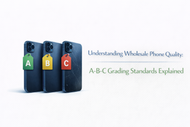
- Wholesale phones are graded from A+ to C, determining cosmetic condition, functionality, and resale value.
- Refurbished phone grades vary by supplier, creating confusion and disputes.
- Grade A+ and A are best for enterprise and education deployments, while B/C and C stock fit budget or parts markets.
- Price differences between grades can reach 40–60%, making accurate grading essential for profit margins.
- Legitimate suppliers provide clear grading policies with photos and condition reports.
Executive Summary
In wholesale phone procurement, condition is just as important as price. Every device is assigned a grade — from flawless A+ stock to heavily used C-grade units — and this grade determines resale value, warranty expectations, and suitability for enterprise or retail use. Yet one of the biggest challenges in the industry is inconsistency: suppliers use different grading standards, and vague terms like “like new” or “excellent condition” often lead to disputes.
This guide explains wholesale phone grading in detail, breaking down A+, A, A/B, B, B/C, and C categories with real-world condition examples, functional expectations, and pricing ranges. It also explores how grading differences affect enterprises, schools, resellers, and parts buyers. Whether you’re sourcing iPhones, Samsung devices, or Android mid-tiers, understanding refurbished phone grades is critical to buying safely and profitably in 2026.
Table of Contents
- Why Wholesale Phone Grading Matters
- Overview of Refurbished Phone Grades
- Grade A+ — Like New / Premium Certified
- Grade A — Excellent Condition
- Grade A/B — Light Wear, Fully Functional
- Grade B — Noticeable Wear, Good Functionality
- Grade B/C — Heavy Wear, Fair Condition
- Grade C — Poor Cosmetic, Functional Units
- Pricing Differences by Grade (Table + Commentary)
- Supplier Comparison: How Standards Differ
- Best Practices for Buyers: Ensuring Grading Transparency
- Final Word: Making Grading Work for Your Business
Why Wholesale Phone Grading Matters
In the U.S. wholesale phone industry, grading is the foundation of trust. Buyers don’t just want phones at the right price — they need assurance about condition, reliability, and resale value. This is why wholesale phone grading is central to every transaction. Without a clear and consistent grading framework, disputes arise, margins shrink, and buyers risk damaging their reputation with end-users.
Grading Defines Value
The difference between a Grade A+ phone and a Grade B device can be hundreds of dollars per unit. Enterprises may pay more for higher grades because they want long-term reliability, while budget resellers accept lower grades to maximize margins in price-sensitive markets. For example:
- A Grade A+ iPhone 14 may wholesale for $750.
- A Grade B iPhone 14 of the same model may wholesale for $550.
That $200 gap reflects cosmetic condition, battery health, and overall usability. For bulk orders of 500–1,000 units, grading accuracy directly impacts six-figure budgets.
Reduces Risk of Disputes
When suppliers and buyers share a common understanding of grades (A+, A, A/B, B, B/C, C), transactions move smoothly. But vague descriptions like “excellent condition” or “like new” leave room for misinterpretation. Buyers who receive downgraded stock often face:
- High return rates.
- Damaged customer trust.
- Disputes with suppliers over refunds or replacements.
By contrast, standardized grading reports with photos prevent these conflicts.
Industry-Specific Relevance
- Enterprises & healthcare systems demand A+ or A stock to ensure uptime and professional presentation.
- Schools & education buyers often choose A/B or B grades for budget-conscious rollouts where minor wear is acceptable.
- Resellers & refurbishers sometimes target B/C or C stock for parts harvesting or low-cost resale channels.
Each grade has a fit — but only if the grading is clear and consistent.
Strategic Insight
Wholesale phones are a trust-driven commodity. Price only makes sense in the context of grading, and buyers who don’t demand transparency expose themselves to losses. By understanding and enforcing grading standards, buyers not only protect margins but also position themselves as professionals who can deliver reliability to their end customers.
Overview of Refurbished Phone Grades
In the wholesale phone industry, grading systems are designed to give buyers a snapshot of condition and functionality before making bulk purchases. The most widely accepted system uses six tiers: A+, A, A/B, B, B/C, and C. Each grade represents not only cosmetic appearance but also performance factors such as battery health, screen quality, and overall usability.
Why the A+ to C Scale Matters
This extended grading scale evolved because a simple “A, B, C” system was too broad. A school district deploying Grade A phones may tolerate a small scratch, while a luxury retailer reselling to premium clients demands flawless A+ units. The more detailed scale ensures pricing more accurately reflects device quality.
Key Features of Each Grade
- Grade A+: Like-new, flawless, premium-certified devices suitable for executive or retail environments.
- Grade A: Excellent condition, minimal wear, reliable for enterprise, education, or healthcare rollouts.
- Grade A/B: Light cosmetic wear but fully functional; a balance between cost savings and usability.
- Grade B: Noticeable wear; devices remain fully functional and are ideal for budget-conscious buyers.
- Grade B/C: Heavy wear, may need battery replacement soon; often used in prepaid or secondary markets.
- Grade C: Poor cosmetic condition, but still functional; typically used for parts, refurbishment, or deep-discount resale.
How Suppliers Differ
The challenge for buyers is that grading definitions vary between suppliers. One supplier’s “Grade A” may look closer to another’s “Grade B.” This inconsistency creates risk, particularly for enterprises and institutions where user expectations are high. Legitimate suppliers reduce confusion by:
- Publishing detailed grading definitions.
- Providing photo examples for each grade.
- Supplying batch-level grading reports.
Strategic Insight
Understanding the full grading scale is essential before diving into price negotiations. Buyers should always align grading expectations in writing with suppliers. This step ensures that whether you’re purchasing Grade A+ phones for executive deployments or Grade C stock for parts harvesting, you know exactly what you’re paying for.
Grade A+ — Like New / Premium Certified
Grade A+ devices represent the highest tier in wholesale phone grading. These units are virtually indistinguishable from brand-new stock, making them the most sought-after by enterprises, healthcare systems, and premium retailers. They are often sourced from OEM-certified refurbishment programs, short-term corporate leases, or open-box returns that saw little to no actual use.
Cosmetic Condition
- Flawless exterior — no scratches, dents, or blemishes.
- Screen is pristine with zero burn-in or discoloration.
- Buttons, ports, and housing show no signs of use.
- Packaging may even include original box and accessories.
Functional Performance
- 100% fully tested and certified.
- Battery health is typically 90–100%, often with replaced or OEM-certified batteries.
- No functional defects across display, camera, connectivity, or sensors.
- Software updated and reset to factory defaults.
Best-Fit Buyers
- Enterprises: Deploying to executives or employees where device appearance and reliability reflect corporate professionalism.
- Healthcare providers: Where uptime and device dependability can impact patient safety.
- Premium retailers: Selling to consumers who expect “like-new” experiences without the retail price tag.
Pricing
- Typically 85–95% of MSRP.
- Offers strong value compared to brand-new stock, but with significant savings in bulk purchases.
Example
A U.S. financial services firm procured 1,200 Grade A+ iPhones for its executive and client-facing staff. Although the upfront price was close to retail, the company secured enterprise-grade warranty support and ensured flawless presentation, reinforcing its professional image while saving 10–15% compared to brand-new devices.
Strategic Insight
Grade A+ stock offers peace of mind — buyers know exactly what they are getting. However, because margins are thin, scammers often misrepresent lower-grade phones as A+. To protect against fraud, buyers should always demand written grading policies, photo samples, and IMEI logs. For organizations where reliability and image matter, the premium is justified.
Grade A — Excellent Condition
Grade A is the most commonly purchased tier in wholesale phone grading. These devices strike the balance between cosmetic appeal, strong functionality, and competitive pricing, making them ideal for enterprises, schools, and retailers that need reliable phones at scale without paying near-retail premiums.
Cosmetic Condition
- Minimal wear, often only visible under close inspection or direct light.
- Screen may have 1–2 faint scratches but no cracks or dead pixels.
- Housing and buttons are clean with no dents or deep scuffs.
- Overall presentation is professional, suitable for business or resale environments.
Functional Performance
- Fully tested with 85%+ battery health.
- All components (screen, camera, sensors, charging port, speakers) function as intended.
- No history of water damage or structural repairs.
- Software wiped and restored to factory settings.
Best-Fit Buyers
- Enterprises: Large rollouts to employees where performance and professionalism are priorities.
- Schools & education programs: Balanced option where minor wear is acceptable, but functionality is critical.
- Retail resellers: Customers willing to accept light cosmetic wear in exchange for value pricing.
Pricing
- Typically 75–85% of MSRP.
- Substantially more affordable than A+ stock while maintaining nearly identical functionality.
Example
A Texas school district purchased 2,000 Grade A iPhones for staff and student use. The devices showed faint cosmetic wear but performed like new. The district saved over 20% compared to A+ procurement, freeing up budget for accessories and extended warranties.
Strategic Insight
Grade A stock offers the best combination of reliability and value for most institutional buyers. While not flawless like A+, these devices perform consistently and look professional enough for enterprise or education environments. The key risk lies in suppliers exaggerating B or A/B devices as Grade A — making it essential to request sample grading reports and conduct random inspections.
Grade A/B — Light Wear, Fully Functional
Grade A/B sits between premium A-grade and more affordable B-grade stock. These devices are fully functional but show slightly more cosmetic wear than Grade A. For many buyers, this tier provides the best balance of cost and performance — particularly when end users prioritize usability over flawless appearance.
Cosmetic Condition
- Noticeable but light cosmetic wear (scuffs, small scratches).
- No cracks in the screen or major dents in the housing.
- Screen may show minor signs of use but remains intact and functional.
- Device still looks presentable but not “near flawless” like Grade A.
Functional Performance
- Fully tested and operational across all functions (touchscreen, Wi-Fi, Bluetooth, cameras, charging ports).
- Battery health typically 80–85%.
- No major repairs or aftermarket parts that compromise performance.
- Suitable for enterprise or education deployments where looks are less important than dependability.
Best-Fit Buyers
- Cost-sensitive enterprises: For staff roles where device performance matters more than pristine condition.
- Education programs: Schools can stretch budgets further while still providing reliable devices.
- Resellers: Attractive to consumer markets looking for affordable smartphones without sacrificing usability.
Pricing
- Typically 65–75% of MSRP.
- Offers better value compared to A-grade but still commands higher resale prices than B-grade.
Example
A logistics company outfitted its field workforce with 1,500 Grade A/B Samsung Galaxy devices. Workers needed functional devices for scanning, communication, and apps but did not require pristine cosmetics. The company saved 25% over Grade A pricing, while performance remained consistent across the fleet.
Strategic Insight
Grade A/B is the sweet spot for many wholesale buyers. The devices function like Grade A but cost closer to B-grade pricing. However, grading inconsistencies often arise here, as suppliers blur lines between A/B and B. To mitigate risk, buyers should request photo samples of each grade and include grading definitions in contracts.
Grade B — Noticeable Wear, Good Functionality
Grade B devices mark the point where cosmetic wear becomes more visible, though the phones remain fully functional. These units are popular in budget-conscious wholesale channels where appearance is less critical than core functionality. For many resellers, Grade B is the “value workhorse” of refurbished inventory.
Cosmetic Condition
- Clearly visible scratches, scuffs, or wear on the housing and screen.
- May include small dents or chips but no structural damage.
- Screen remains intact with no cracks, though minor blemishes or light burn-in may appear.
- Overall condition is acceptable for resale but not premium-looking.
Functional Performance
- Fully operational with all core features working.
- Battery health usually 75–85%. Some units may require replacement sooner.
- Cameras, speakers, and sensors function correctly, though cosmetic issues may affect resale presentation.
- Suitable for deployments where functionality outweighs aesthetics.
Best-Fit Buyers
- Prepaid carriers: Often use Grade B devices in entry-level plans.
- Budget resellers: Attractive to consumers prioritizing affordability.
- Enterprises in field operations: Where rugged cases are used and cosmetics are irrelevant.
Pricing
- Typically 50–65% of MSRP.
- Large price gap from A-grade units makes these devices appealing for cost-sensitive markets.
Example
A regional prepaid wireless provider purchased 3,000 Grade B iPhones for its low-cost entry plans. Though many units showed scratches and scuffs, they worked reliably. Customers accepted the trade-off because the devices were offered at affordable monthly rates.
Strategic Insight
Grade B stock is ideal for buyers who want functionality without paying for pristine cosmetics. However, suppliers sometimes exaggerate B/C devices as B-grade. To avoid disputes, buyers should require detailed inspection reports and factor potential battery replacements into their landed cost analysis.
Grade B/C — Heavy Wear, Fair Condition
Grade B/C devices sit on the lower end of the wholesale grading spectrum. These units are still functional but show heavy cosmetic wear and may require additional reconditioning before resale. While not suitable for premium enterprise deployments, they remain useful in budget channels, prepaid markets, and parts harvesting.
Cosmetic Condition
- Significant scratches, dents, and scuffs on screen and housing.
- Possible screen blemishes (burn-in, discoloration, minor cracks in glass).
- Back casing may be chipped or heavily worn.
- Overall device looks heavily used, though structurally intact.
Functional Performance
- Core features (touchscreen, cameras, connectivity) work, but performance may be inconsistent.
- Battery health often falls below 75%. Many units will need battery replacement.
- May include minor defects that don’t stop the phone from functioning (e.g., weak speakers, sticky buttons).
- Requires refurbishment or aftermarket repairs for best resale potential.
Best-Fit Buyers
- Refurbishers: Buyers with capacity to recondition devices for higher resale categories.
- Prepaid and secondary markets: Where cost savings outweigh cosmetic issues.
- Parts harvesters: Many Grade B/C devices are purchased to salvage displays, logic boards, or cameras.
Pricing
- Typically 35–50% of MSRP.
- Lower entry price appeals to refurbishers aiming to recondition and resell at higher grades.
Example
A U.S. refurbisher sourced 5,000 Grade B/C Samsung Galaxy phones at 40% of MSRP. After screen and battery replacements, nearly half were resold as Grade A/B stock, generating strong profit margins. The remainder were harvested for spare parts.
Strategic Insight
Grade B/C stock is not a “plug-and-play” solution for most buyers. It is a strategic investment for those with refurbishment or repair capacity. For organizations without in-house reconditioning, B/C stock can lead to higher-than-expected costs and disappointed customers. Buyers should only source this grade if they have a clear downstream strategy.
Grade C — Poor Cosmetic, Functional Units
Grade C represents the lowest tier in wholesale phone grading. These devices are heavily worn, often nearing the end of their life cycle, but remain at least partially functional. They are rarely suitable for enterprise or retail resale in their current condition but still play an important role in the wholesale ecosystem — especially for parts harvesting, low-income markets, or refurbishment projects.
Cosmetic Condition
- Extensive cosmetic damage — deep scratches, dents, and cracks.
- Screens may be chipped, show heavy burn-in, or have multiple blemishes.
- Housings are often discolored or warped from long-term use.
- Overall condition is visibly poor and not acceptable for direct retail resale.
Functional Performance
- Devices are generally still operational, but issues are common.
- Battery health often below 70%, with many requiring immediate replacement.
- Functional defects may include weak cameras, faulty speakers, or inconsistent charging ports.
- May not pass full diagnostics without repairs or parts replacement.
Best-Fit Buyers
- Parts resellers: Extracting displays, logic boards, or cameras for refurbishment.
- Repair shops: Low-cost devices used as donor units for fixing higher-grade phones.
- Ultra-budget markets: In rare cases, resold “as is” at very low price points.
Pricing
- Typically 20–35% of MSRP.
- Lowest entry point in the wholesale chain, but margins depend heavily on refurbishment or salvage strategy.
Example
A U.S. repair chain bought 8,000 Grade C iPhones at 25% of MSRP. Only 15% were resold as working budget devices, while the majority were dismantled for screens, boards, and cameras. Despite the poor cosmetic condition, the parts value alone exceeded the purchase price, making the deal profitable.
Strategic Insight
Grade C devices are not end-user ready. They are a calculated gamble — profitable only for buyers with repair, refurbishment, or parts resale channels. Enterprises, schools, and healthcare buyers should avoid this category altogether, as the costs of reconditioning far outweigh any upfront savings. For refurbishers and parts markets, however, Grade C represents a low-cost pipeline of valuable components.
Pricing Differences by Grade
The financial impact of grading is one of the most important factors in wholesale procurement. The difference between Grade A+ and Grade C stock can represent hundreds of dollars per device — and, in large-volume purchases, hundreds of thousands of dollars in budget allocation. Buyers who understand pricing by grade can align purchases with their operational goals, whether that’s maximizing reliability, minimizing upfront costs, or sourcing parts for refurbishment.
Wholesale Phone Pricing by Grade (Example: iPhone 14, MSRP $999)
|
Grade |
Typical Wholesale % of MSRP |
Approx. Price (USD) |
Buyer Profile |
|
A+ |
85–95% |
$850–$950 |
Enterprises, premium retail, healthcare |
|
A |
75–85% |
$750–$850 |
Enterprises, schools, retailers |
|
A/B |
65–75% |
$650–$750 |
Education, SMBs, cost-sensitive enterprise |
|
B |
50–65% |
$500–$650 |
Prepaid carriers, budget resellers |
|
B/C |
35–50% |
$350–$500 |
Refurbishers, parts harvesting |
|
C |
20–35% |
$200–$350 |
Parts suppliers, repair shops |
Pricing Commentary
- Thin Margins at the Top:
A+ and A stock often leaves suppliers with slim margins but offers predictability and professionalism. Enterprises and institutions pay more upfront to avoid risk and minimize post-deployment issues. - Sweet Spot in Mid-Grades:
A/B and B are often considered the “value zones” in wholesale phone grading. They offer significant cost savings while maintaining functionality, making them ideal for schools, SMBs, and prepaid markets. - High Risk, High Reward at the Bottom:
B/C and C stock require additional investment in refurbishment, testing, or harvesting. While they present the lowest entry costs, profitability depends entirely on the buyer’s repair and parts infrastructure.
Strategic Insight
Pricing is directly tied to grading accuracy. A buyer expecting Grade A stock but receiving A/B or B devices may lose 10–20% of device value instantly. That’s why it’s essential to verify grading definitions in writing, request photos, and conduct random inspections before large-scale procurement. Wholesale profitability doesn’t just come from sourcing cheap — it comes from sourcing accurately.
Supplier Comparison: How Standards Differ
One of the biggest challenges in wholesale phone grading is that suppliers don’t always use the same definitions. While A+, A, A/B, B, B/C, and C are widely recognized in the industry, the interpretation of these categories often varies by supplier. This inconsistency creates confusion, disputes, and, in some cases, financial loss for buyers who expected one grade but received another.
Why Standards Differ
Suppliers differ in grading because:
- No universal regulation exists — grading systems are industry-driven, not legally mandated.
- Regional differences — U.S. suppliers may grade more strictly than some international exporters.
- Market positioning — some suppliers inflate grades to attract buyers with seemingly better inventory.
- Operational capacity — smaller refurbishers may lack advanced testing equipment, leading to less precise grading.
Real-World Example
Two U.S. buyers ordered “Grade A” iPhones from two different suppliers. One shipment contained pristine devices with 90% battery health and no cosmetic wear — a true Grade A. The other contained phones with visible scratches and batteries averaging 80% health, closer to Grade A/B or B. Both were sold under the same label, creating disputes and eroding trust.
How Buyers Can Protect Themselves
- Request supplier grading definitions in writing. Legitimate suppliers provide detailed grading charts.
- Ask for photo and video samples of each grade before committing to large purchases.
- Require batch-level grading reports with IMEI lists and condition notes.
- Standardize your own grading policy internally so that all suppliers must align to your definitions.
Strategic Insight
Grading inconsistency is not always malicious — but it’s always risky for buyers. By enforcing standard grading definitions, enterprises, schools, and resellers can compare suppliers on equal footing. This transforms grading from a source of disputes into a source of competitive advantage, where trusted suppliers earn repeat business by adhering to clear standards.
Best Practices for Buyers: Ensuring Grading Transparency
Since grading directly impacts both pricing and end-user satisfaction, buyers must adopt a proactive approach to ensure transparency in every wholesale phone deal. Too often, disputes arise not because suppliers are outright fraudulent, but because expectations weren’t aligned. By embedding grading best practices into procurement, buyers can avoid miscommunication, reduce risk, and secure consistent value.
Establish Written Grading Standards
The first step is to formalize your own grading framework. Whether you adopt the industry’s A+ to C scale or customize it for your business, make sure the definitions are clear and measurable. This document should include:
- Cosmetic condition expectations (scratches, dents, screen clarity).
- Functional performance benchmarks (battery health %, diagnostics).
- Return thresholds (e.g., if more than 5% of a batch doesn’t meet grade, the supplier replaces them).
When suppliers see that you have defined grading policies, they are more likely to align their shipments accordingly.
Require Photo & Video Documentation
Don’t rely solely on written descriptions. Request visual proof of each grade before making large orders. Many legitimate suppliers provide galleries or video walk-throughs of sample stock. This visual evidence ensures you and the supplier share the same understanding of what “Grade A” or “Grade B” looks like in practice.
Conduct Random Batch Inspections
Even with clear definitions, verification is key. Use either in-house QC teams or third-party inspectors to randomly test batches. Inspections should cover:
- IMEI validation.
- Cosmetic grading vs supplier claims.
- Battery health sampling.
By verifying just 5–10% of a shipment, buyers can catch discrepancies early and hold suppliers accountable.
Build Transparency into Contracts
The most professional buyers tie grading directly into their contracts. This may include:
- Service Level Agreements (SLAs) on grading accuracy.
- Penalties or credits for mis-graded devices.
- Inspection rights before final payment release.
Contracts shift grading from a vague promise to a measurable, enforceable obligation.
Strategic Insight
Transparency is a two-way street. Legitimate wholesale phone suppliers welcome clear grading expectations because it reduces disputes and builds trust. Scammers or opportunistic sellers resist them. By standardizing grading, requesting proof, and embedding accountability, buyers not only protect themselves but also signal professionalism that attracts the best suppliers in the U.S. market.
Final Word: Making Grading Work for Your Business
In the competitive U.S. wholesale phone market, price alone never tells the full story. Grading is the true differentiator — it determines whether a shipment supports enterprise-level deployments, satisfies education procurement requirements, or simply fills demand in budget resale channels. Without clarity, buyers risk overpaying for low-grade stock or damaging their reputation by passing poor-quality devices downstream.
Wholesale phone grading from A+ through C provides the framework for aligning price, condition, and end-user expectations. A+ stock delivers flawless performance for premium environments, while B and B/C units provide cost savings for budget-conscious markets. Grade C, though heavily worn, still plays a role in refurbishment and parts supply. Each grade has a place in the ecosystem, but only when buyers understand the standards and hold suppliers accountable to them.
The biggest challenge is inconsistency. Refurbished phone grades vary widely by supplier, which is why buyers must establish their own grading definitions, request visual proof, and enforce accountability through contracts and inspections. By taking these steps, enterprises, schools, and resellers ensure they are not just buying phones, but buying confidence, compliance, and long-term profitability.
The message is simple: grading isn’t just about cosmetics — it’s about business outcomes. When buyers demand transparency and align expectations with legitimate wholesale phone suppliers, grading becomes a powerful tool to protect margins, build trust, and deliver reliability in every transaction.
Search this blog